Book your first
Appointment


Beyond Talk Therapy: Alternative Ways to Manage Mental Health Symptoms
Wednesday, October 14, 2026
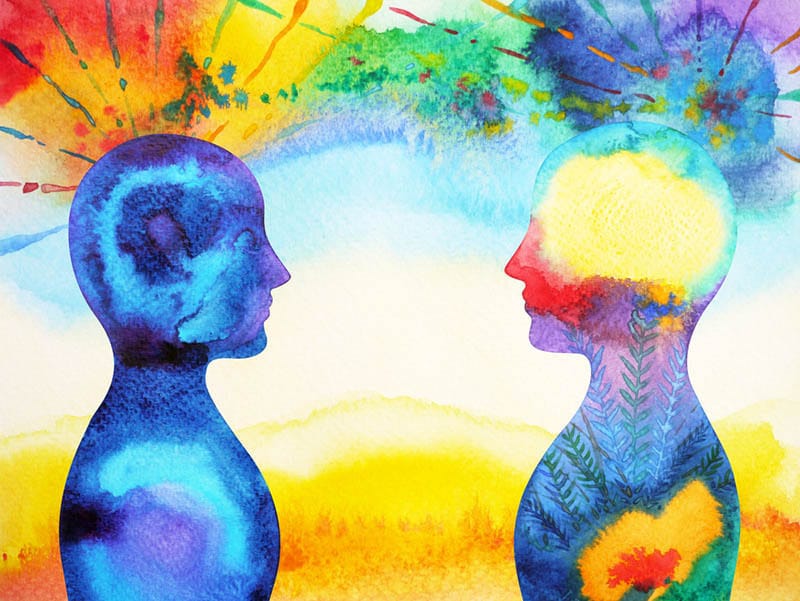
When many people picture therapy, they imagine two people sitting across from each other in a quiet room, talking through thoughts, feelings, relationships, and past experiences. For good reason, talk-based psychotherapy has helped millions of people better understand themselves, develop coping skills, process difficult experiences, and change patterns that are no longer serving them.
But sometimes words aren't enough.
You may understand exactly why you're anxious and still feel your heart racing. You may be able to explain where a trauma response originated and still feel your body freeze when something triggers it. You may know intellectually that you're safe, yet your nervous system seems to have missed the memo. For some people, sitting and talking can even feel frustrating when they have already spent years analyzing the same experiences without feeling the change they hoped would follow.
Mental health doesn't exist only in our thoughts. It is influenced by the brain, body, nervous system, relationships, environment, sleep, movement, sensory experiences, and even the ways we express emotions when words are difficult to find. This is one reason modern mental health treatment has expanded well beyond the traditional image of therapy. Approaches involving movement, mindfulness, creativity, breath, the body, and other experiential techniques can offer additional pathways for managing symptoms and supporting healing.
The goal isn't necessarily to replace talk therapy. Often, the most effective approach is to broaden the toolbox.
Why Talking Isn't Always the Whole Answer
Talking is powerful because language helps us organize experiences. When we put feelings into words, identify patterns, or tell our story to someone who responds with empathy rather than judgment, we can begin making sense of things that once felt confusing or overwhelming. Traditional psychotherapy also gives people opportunities to challenge distorted thinking, develop healthier behaviors, strengthen relationships, and build emotional awareness.
Yet emotional experiences aren't stored and expressed through language alone. Anxiety can show up as muscle tension, rapid breathing, nausea, dizziness, restlessness, or a pounding heart. Trauma can involve hypervigilance, startling easily, feeling disconnected from the body, or reacting intensely to sensory cues. Depression can feel like physical heaviness and exhaustion long before someone finds words to describe what is happening.
This is why someone can sometimes say, "I know I'm safe, but I don't feel safe." Cognitively, the person understands there is no immediate danger. Physiologically, however, the body is still responding as though a threat exists.
Alternative and complementary approaches can help bridge that gap by working with mental health from another direction. Instead of asking only, "What are you thinking?" treatment may also explore, "What is happening in your body? Where are you holding tension? What happens when you move? What helps your nervous system settle? What can you express without needing to explain it?"
Those questions can open doors that conversation alone sometimes cannot.
Movement Can Be Mental Health Treatment
Exercise is frequently discussed as something we should do for our physical health, which can make advice to "exercise more" sound dismissive when someone is struggling with depression or anxiety. But physical activity deserves more respect than that. There is substantial research showing that movement can influence mental health.
A large 2024 systematic review and network meta-analysis published in The BMJ examined 218 studies involving more than 14,000 participants with depression. Researchers found that several forms of exercise, including walking or jogging, yoga, strength training, and mixed aerobic exercise, were associated with meaningful reductions in depressive symptoms. The authors concluded that exercise can be considered alongside psychotherapy and medication as a treatment option for depression, while also noting limitations in the quality of some of the available evidence.
Movement doesn't have to mean joining a gym or training for a marathon. Walking outside, stretching, dancing in the kitchen, practicing yoga, swimming, strength training, or taking a bike ride all involve the body in ways that can affect mood, attention, energy, and stress regulation.
There are also formal therapeutic approaches built around movement. Dance/Movement Therapy, for example, uses movement within a therapeutic relationship to support emotional, cognitive, physical, and social integration. A meta-analysis of controlled studies found benefits across several psychological outcomes, including depression and anxiety, although researchers noted variability and methodological limitations across the studies.
Sometimes the body can express what the mouth hasn't figured out how to say yet.
Mindfulness Changes Our Relationship With Thoughts
When people first hear about mindfulness, they sometimes imagine sitting perfectly still while somehow achieving a completely blank mind. Fortunately, that isn't the assignment. If eliminating thoughts were required, most of us would fail before breakfast.
Mindfulness is the practice of intentionally noticing what is happening in the present moment without immediately judging, fixing, or reacting to it. Instead of being swept away by every thought, we begin learning to observe thoughts as mental events.
Someone experiencing anxiety might normally think, "Something bad is going to happen," and immediately begin responding as though that prediction were fact. Mindfulness creates a small amount of space: "I'm noticing that my mind is predicting something bad will happen." The anxiety may still be present, but the person now has more choice about what happens next.
Research supports mindfulness-based interventions for a range of mental health symptoms. Meta-analyses have found improvements in anxiety and depression across various populations, although results vary depending on the population, intervention, and study design. For example, a review of online mindfulness interventions involving more than 3,000 adults found improvements in anxiety compared with control conditions, while also cautioning that the evidence had methodological limitations.
Mindfulness can be incorporated into formal therapy, but it can also be practiced in ordinary life. Paying attention to the sensation of water during a shower, noticing sounds while walking outside, spending several minutes following the breath, or eating a meal without simultaneously scrolling through a phone can all become small exercises in bringing attention back to the present.
Creative Therapies Give Emotions Another Language
There are experiences that can be difficult to explain verbally. Grief, trauma, identity, fear, and complicated relationships don't always arrive in tidy sentences. Sometimes a person knows something is there but cannot quite put it into words.
Art therapy uses creative expression within a therapeutic relationship to explore emotions, experiences, and patterns. The finished artwork isn't the point, and artistic talent isn't required. A drawing, collage, sculpture, or other creative process can provide a way to externalize something that previously existed only as a vague internal experience.
The research base is growing. A 2024 systematic review and meta-analysis examining visual arts therapy following traumatic experiences included 21 randomized controlled trials and found evidence supporting benefits across trauma-related and other psychological outcomes, while also highlighting variation among interventions and studies.
Music, movement, writing, and other forms of creative expression may offer similar opportunities to process emotion in ways that feel less direct than traditional conversation. This doesn't mean putting on your favorite playlist is equivalent to music therapy or doodling is the same as working with a trained art therapist. Formal creative arts therapies involve clinical training and therapeutic goals. Still, ordinary creative expression can be a useful mental wellness practice outside therapy.
A journal doesn't have to contain perfect sentences. A sketch doesn't have to be beautiful. Sometimes the purpose of creating something is simply to give an emotion somewhere to go.
Working With the Nervous System Through the Body
Many people experiencing anxiety or trauma become extremely familiar with what happens when their nervous system shifts into protection. The heart speeds up, breathing changes, muscles tighten, attention narrows, and the body prepares to fight, flee, freeze, or otherwise respond to perceived danger.
This is one reason somatic approaches have become increasingly visible in mental health care. Rather than focusing exclusively on the story of what happened, somatic work pays attention to physical sensations, movement, posture, breathing, impulses, and the body's response to emotional experiences.
A therapist might help someone notice that their shoulders tense whenever they discuss a particular relationship, or that they stop breathing normally when recalling a stressful event. Instead of immediately analyzing why, the person may first learn to notice the sensation without becoming overwhelmed by it. Over time, this can help build greater awareness of the body's early warning signals and develop more flexible responses to stress.
Grounding techniques work on a similar principle. When anxiety pulls the mind toward catastrophic predictions or trauma pulls attention toward something that happened in the past, sensory information can help orient attention toward the present. Feeling both feet against the floor, noticing the temperature of an object in your hand, identifying sounds in the room, or looking around and naming what you see can provide concrete information about where you are right now.
The goal isn't to convince yourself that difficult emotions don't exist. It is to help the nervous system distinguish between remembering danger and currently being in danger.
Breathwork: Powerful, Accessible and Still Being Studied
Breathing occupies an unusual place in the body because it happens automatically, yet we can also deliberately change it. That makes the breath an interesting bridge between conscious behavior and physiological regulation.
A 2023 meta-analysis of randomized controlled trials found that breathwork interventions were associated with small-to-moderate improvements in self-reported stress, anxiety, and depressive symptoms compared with non-breathwork controls. However, the researchers specifically cautioned that many studies carried a moderate risk of bias and that enthusiasm for breathwork should remain grounded in the quality of the evidence.
That caution is important because "breathwork" describes many different practices. Slow diaphragmatic breathing is very different from more intensive breathing experiences. One rigorous randomized trial of coherent breathing, for example, found that participants improved over time but that slower coherent breathing did not outperform an active breathing comparison condition.
In other words, the science is promising but still evolving.
For everyday stress management, simple slow breathing can be an accessible place to begin. More intensive breathwork practices can produce strong physical and emotional experiences and may not be appropriate for everyone, particularly people with certain medical or psychological conditions. Those approaches are better undertaken with appropriate screening and trained facilitation rather than assuming that more intense automatically means more therapeutic.
Other Experiential Approaches Can Add Another Layer
Mental health treatment continues to evolve, and clinicians increasingly combine traditional psychotherapy with experiential approaches based on the needs of the individual. EMDR, for example, uses bilateral stimulation while a person processes distressing memories and is supported by a substantial evidence base for PTSD. Hypnotherapy uses focused attention and therapeutic suggestion and has been studied for concerns including pain and anxiety. Yoga therapy combines movement, breathing, awareness, and other practices in a structured therapeutic framework.
There are also interventions that involve sensory experiences, time in nature, meditation, expressive writing, relaxation training, and other mind-body practices. Some have stronger research support than others, and the word alternative should never automatically be interpreted to mean proven, natural, or risk-free. Mental wellness has its share of shiny objects, and popularity on social media isn't the same thing as clinical evidence.
A useful question isn't simply, "Is this alternative?" It is: What evidence supports it, what is it intended to treat, what are the risks, and is it appropriate for this particular person?
That is where an integrative approach becomes especially valuable. Rather than assuming everyone needs the same intervention, treatment can draw from multiple evidence-informed tools while keeping the person's symptoms, goals, preferences, health history, and response to treatment at the center.
A Few Things You Can Try at Home
You don't need to begin an entirely new therapy to experiment with some of these principles. Small practices can give you a sense of which approaches your mind and body respond to best.
Try taking a 10-minute walk without your phone and intentionally notice your surroundings rather than treating the walk as another task to complete. Spend three minutes breathing slowly, without forcing an elaborate technique, and notice whether your body feels different afterward. Put on a song that matches your emotional state and allow yourself to move rather than simply listening. Try drawing or journaling about a feeling without worrying about making the result coherent or attractive.
You can also practice a simple sensory grounding exercise when you're feeling anxious. Notice five things you can see, four things you can physically feel, three things you can hear, two things you can smell, and one thing you can taste or imagine tasting. The purpose isn't to make anxiety vanish. It's to redirect some of the brain's attention from internal alarm signals toward information coming from the present environment.
Think of these practices as experiments rather than assignments. Mental health isn't improved by collecting another list of things you're failing to do. Pay attention to what actually changes your state. Does walking make your thoughts feel less crowded? Does music help you access emotions? Does slow breathing settle you or make you more uncomfortable? Does creating something help when talking doesn't?
Your response is useful information.
There Is More Than One Door Into Healing
For decades, mental health treatment was often framed as something that happened primarily through conversation. We now have a much broader understanding of the ways people experience psychological distress and the many pathways through which change can occur.
Some people process through words. Others need movement before the words arrive. Some connect through art, imagery, or music. Others respond to mindfulness, grounding, breathing, or body-based approaches. Many people benefit from a combination.
None of this diminishes the value of psychotherapy. Instead, it expands what therapy and mental health care can look like.
Final Thoughts
Managing mental health symptoms isn't about finding the single technique that works for everyone. Human beings are far too complicated for that, which is inconvenient for anyone hoping the brain might come with a universal instruction manual.
The better question may be: What combination of approaches helps this particular person feel safer, function better, understand themselves more deeply, and build a life that feels more manageable and meaningful?
Research increasingly supports the idea that mental health can be influenced through multiple pathways, including movement, mindfulness, creative expression, and some forms of breathwork and body-based intervention. The strength of the evidence differs among approaches, and complementary practices shouldn't automatically replace professional treatment when symptoms are severe or persistent. But they can broaden the ways we care for ourselves and provide additional tools when talking alone doesn't seem to reach the whole experience.
Sometimes healing begins with talking.
Sometimes it begins with moving, breathing, creating, noticing, or reconnecting with a body that has been carrying the story all along.

Kimberly Sieper
Blue Lotus Wellness

Get Help Now...
If you are feeling lost, overwhelemed, depressed, sad, etc. book your first appointment now. You dont need to go through it alone. We can help.



PAGES
SOCIAL
HOURS OF OPERATION
Monday - Friday: 9am-7pm
Saturday: Closed
Sunday: Closed
Copyright © 2025 Blue Lotus Wellness, LLC. All Rights Reserved