Book your first
Appointment


When Your Body Says “I’m Not Safe”: Understanding the Physical Side of Anxiety
Wednesday, October 21, 2026
When Your Body Says “I’m Not Safe”: Understanding the Physical Side of Anxiety
Anxiety doesn't always begin with a worried thought. Sometimes it begins with a racing heart. A tight chest. A strange feeling in your stomach. Shallow breathing. Dizziness. Trembling hands. Tense shoulders. Or the sudden sense that something is wrong, even when you can't identify anything in your environment that should make you afraid.
This can be one of the most confusing parts of anxiety. You may know intellectually that you're safe while your body seems completely unconvinced. You can tell yourself there is nothing to worry about, remind yourself that you've handled similar situations before, and try to reason your way out of the feeling, yet your heart keeps pounding and your muscles remain braced as though something dangerous is about to happen.
That's because anxiety isn't only a pattern of thinking. It is also a physical state involving the brain, autonomic nervous system, hormones, breathing, muscles, heart, digestive system, and the way the brain interprets signals coming from inside the body. Physical symptoms such as increased heart rate, sweating, difficulty breathing, gastrointestinal discomfort, dizziness, muscle tension, and restlessness are well-established features of anxiety disorders.
Understanding this can change the way we respond to anxiety. Instead of asking only, "Why am I thinking this way?" it can also be helpful to ask, "What is my body responding to, and how can I help it recognize that I am safe right now?"
Your Anxiety System Was Designed to Protect You
Anxiety is uncomfortable, but the system behind it isn't inherently defective. In fact, it exists for a very good reason: survival.
Imagine walking through the woods and suddenly hearing something moving in the bushes nearby. Your brain doesn't hold a committee meeting to determine whether the sound is a squirrel or a bear. It begins preparing you to respond. Your attention sharpens, your heart rate may increase, your breathing changes, muscles tense, and energy becomes available for action.
This is part of the body's fight-or-flight response, driven in part by the sympathetic branch of the autonomic nervous system. When the brain detects potential danger, a coordinated series of physiological changes prepares the body to protect itself. These reactions can happen quickly because survival systems aren't designed to wait until we have gathered every available piece of evidence.
That's extremely useful when the threat is real. The problem arises when the alarm system becomes too sensitive, activates too frequently, or has difficulty recognizing when the danger has passed.
Think of a smoke detector. You absolutely want it to scream when your house is on fire. But imagine if it also went off every time you made toast, took a hot shower, or lit a candle. The detector isn't trying to make your life miserable. It's doing exactly what it was designed to do, but it has become overly sensitive.
Anxiety can work in much the same way.
Why Your Body Can Feel Anxious Before You Know Why
We often think emotions follow a simple sequence: something happens, we think about it, and then our body responds. In reality, communication between the brain and body travels in both directions.
Your brain is constantly receiving information about what is happening inside you. It monitors changes in heartbeat, breathing, temperature, muscle tension, digestion, hunger, pain, and many other internal signals. This process is known as interoception, essentially the nervous system's way of sensing, interpreting, and integrating information coming from inside the body.
Most of this happens outside conscious awareness. You don't normally spend your day monitoring every heartbeat or digestive movement. But when anxiety is present, bodily sensations can begin attracting much more attention.
A 2024 meta-analysis examining 71 studies found that anxiety was associated with greater negative attention and sensitivity to bodily signals, as well as a tendency to evaluate those sensations more negatively. Interestingly, the research does not suggest that people with anxiety are universally "better" at accurately detecting internal signals. The relationship is more complicated. Anxiety may have less to do with simply noticing the body and more to do with how those sensations are attended to and interpreted.
This helps explain why two people can experience the same physical sensation very differently. One person notices their heart beating quickly after climbing stairs and thinks, "I walked up those stairs too fast." Someone who fears bodily sensations may notice the same heartbeat and think, "Why is my heart doing that? Is something wrong?"
The sensation becomes frightening, which increases anxiety, which can make the sensation stronger.
And suddenly the smoke detector is reacting to the smoke detector.
The Anxiety Feedback Loop
This body-brain feedback loop can become especially powerful in panic.
Imagine noticing that your breathing feels slightly different. Your brain interprets the sensation as dangerous, so anxiety increases. As anxiety rises, your breathing becomes faster and shallower, your heart rate increases, and you may feel lightheaded. Those new sensations seem to confirm the original fear: Something really is wrong.
The brain then increases the alarm even further.
This is one reason telling someone to "just calm down" rarely works. The person isn't simply choosing worried thoughts. Their body is generating real physical sensations, and the brain is attempting to interpret those sensations in real time.
For some people, the fear eventually shifts from the original situation to the sensations themselves. They may become afraid of feeling dizzy, noticing their heartbeat, becoming short of breath, or experiencing the first signs of panic. Researchers refer to this tendency to fear the consequences of anxiety-related sensations as anxiety sensitivity, and it plays an important role in panic disorder.
The good news is that this loop can also be interrupted.
Why Anxiety Can Show Up in So Many Parts of the Body
Anxiety can sometimes feel like a strange collection of unrelated symptoms. One day it's chest tightness. Another day it's nausea. Then headaches, jaw tension, exhaustion, tingling, or feeling unable to take a satisfying breath.
But the body isn't made up of separate departments that never speak to each other. The nervous system influences multiple organs and body systems at once.
When the body prepares for danger, resources shift toward immediate survival. Muscles may tense in preparation for movement. Breathing changes to support increased demand. Heart rate may rise. Digestion can change because processing lunch is not the body's top priority when it believes you might need to escape a threat.
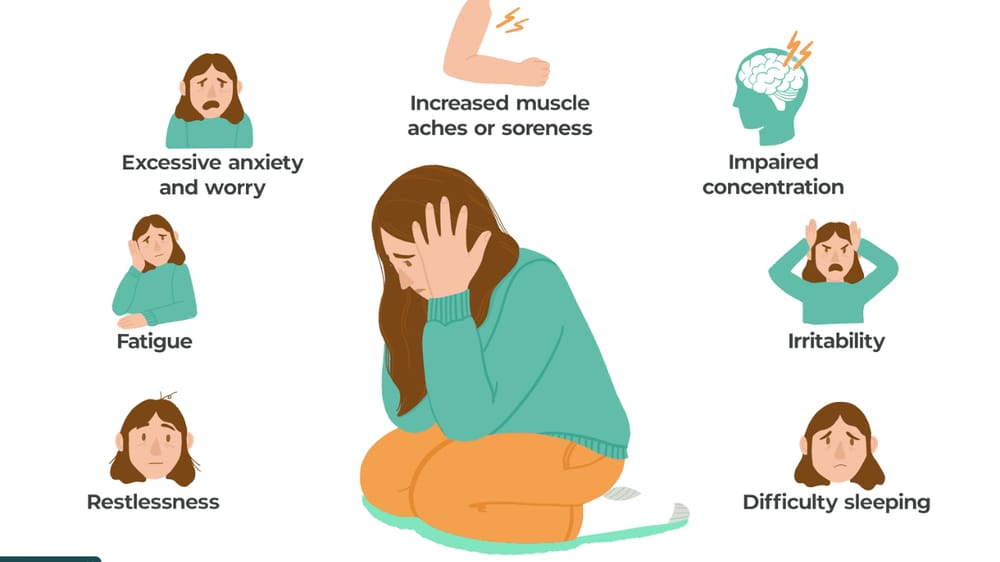
This is why anxiety may involve symptoms such as:
Racing or pounding heart
Chest tightness or changes in breathing
Muscle tension, headaches, or jaw clenching
Nausea, stomach discomfort, or digestive changes
Sweating, trembling, or feeling hot or cold
Dizziness or lightheadedness
Restlessness or difficulty sitting still
Fatigue after prolonged periods of tension or hyperarousal
These symptoms are real. Calling them "anxiety" doesn't mean they are imaginary or that physical symptoms should automatically be dismissed as psychological. New, severe, persistent, or concerning physical symptoms should be medically evaluated when appropriate. But once medical causes have been considered, understanding how strongly anxiety can affect the body can prevent people from interpreting every sensation as evidence that something catastrophic is happening.
The Body Can Learn Safety, Too
If anxiety involves learned associations between sensations, situations, and danger, treatment can help create new associations.
This is one reason Cognitive Behavioral Therapy (CBT) can be so effective for anxiety. CBT helps people identify catastrophic interpretations and examine them more accurately. Instead of automatically moving from "My heart is racing" to "Something terrible is happening," a person learns to recognize alternative explanations and observe what actually happens over time.
For panic disorder, CBT may also include interoceptive exposure, in which feared physical sensations are deliberately and safely produced in a structured therapeutic setting. Depending on the person and treatment plan, exercises might temporarily create sensations such as dizziness, an elevated heart rate, or shortness of breath. The purpose isn't to make someone uncomfortable for the sake of it. It allows the brain to repeatedly experience a sensation without the catastrophe it has learned to expect. Interoceptive exposure is an established component of treatment for panic and is designed specifically to reduce fear of bodily sensations.
Other therapies may approach the body differently. Somatic and trauma-informed approaches can help people become more aware of physical sensations, impulses, posture, movement, and nervous-system responses without immediately becoming overwhelmed by them. Mindfulness-based approaches teach people to notice sensations with curiosity rather than automatically labeling them as dangerous. EMDR may help process experiences connected to persistent threat responses, while DBT provides practical strategies for tolerating distress and regulating intense emotional and physiological states.
The approaches differ, but they share an important principle: healing anxiety isn't always about convincing yourself to stop worrying. Sometimes the brain and body need repeated experiences that teach, "I can feel this sensation and still be safe."
Breathing Is One Way Into the Nervous System
When people are anxious, they're frequently told to "take a deep breath." That's not entirely wrong, but the way we breathe matters more than simply inhaling as much air as possible.
Slow, comfortable breathing can influence autonomic regulation. A systematic review of slow-breathing research found changes associated with autonomic nervous-system activity, including increased heart-rate variability, alongside reductions in measures of emotional arousal and anxiety in the included studies. The evidence doesn't mean breathing exercises are a cure for anxiety, but it helps explain why deliberate breathing can sometimes change the physical experience of stress.
For many people, focusing on a slightly longer exhale can be easier than trying to take enormous "deep breaths." You might gently inhale for a comfortable count and allow the exhale to last a little longer, without straining or holding your breath. The goal isn't to breathe perfectly. It's to give the body a few minutes of slower, steadier input.
It's also important to recognize that breath-focused exercises don't feel calming for everyone. Some people with panic or trauma histories become more anxious when asked to concentrate intensely on breathing. In that case, grounding through movement, touch, sound, or visual attention may be a better starting point.
There is no prize for regulating your nervous system the "right" way.
Simple Ways to Help Your Body Recognize the Present
When anxiety is high, complicated coping strategies can feel like trying to assemble furniture during a fire drill. Simple is often better.
One helpful approach is orienting. Slowly look around the room rather than remaining locked onto the anxious sensation. Notice where you are, what you see, what sounds you hear, and what tells you that you're in the present moment. Anxiety pulls attention inward toward potential threat. Orienting deliberately widens the lens.
You can also experiment with physical grounding. Feel the pressure of your feet against the floor or your back against a chair. Hold something cool or textured. Stretch your hands, roll your shoulders, or take a slow walk. These actions give the brain additional sensory information to process besides the internal alarm.
Another useful practice is simply naming what is happening accurately. Instead of thinking, "Something is terribly wrong," try: "My body is having an anxiety response right now." You don't need to force yourself to believe that everything is wonderful. You're giving your brain a more accurate explanation for the sensations it is experiencing.
Finally, resist the urge to check constantly whether the anxiety is gone. Repeatedly asking, "Am I calm yet? Is my heart still beating fast? Is the dizziness gone?" keeps attention fixed on the very sensations you're trying to make less important. The goal is not necessarily to make every sensation disappear. It's to teach yourself that the sensation can exist without requiring an emergency response.
When Avoidance Makes the Alarm Louder
It is completely understandable to avoid situations that trigger uncomfortable physical symptoms. If the grocery store once triggered a panic attack, staying home may feel safer. If exercise makes your heart beat faster and that sensation scares you, you may stop exercising. If driving causes dizziness, you may begin relying on other people for transportation.
In the short term, avoidance works beautifully. Anxiety drops.
Unfortunately, the brain can interpret that relief as evidence that avoiding the situation kept you safe. The next time the situation appears, the alarm may become even louder.
Gradually and appropriately approaching feared situations is therefore an important part of many anxiety treatments. The goal isn't to throw yourself into overwhelming situations or force yourself through panic. Effective exposure is planned, purposeful, and paced so the nervous system has an opportunity to learn something new.
The lesson becomes less "I survived because I escaped" and more "I experienced anxiety, stayed present, and discovered that I could handle it."
That is a very different message for the brain.
Your Body Isn't Betraying You
People with anxiety often develop an adversarial relationship with their bodies. They become frustrated with the racing heart, angry about the stomach problems, embarrassed by shaking, or frightened by every unfamiliar sensation. The body begins to feel like an unpredictable enemy.
But your nervous system isn't trying to sabotage you.
It is trying to protect you.
Sometimes it is working from outdated information. Sometimes it has become overly sensitive after chronic stress, trauma, panic, illness, or prolonged uncertainty. Sometimes it interprets harmless sensations as evidence of danger because those sensations became associated with fear in the past.
Understanding that doesn't make anxiety disappear, but it changes the relationship.
Instead of "Why is my body doing this to me?" the question can become, "What is my nervous system trying to protect me from, and what would help it learn something different?"
That shift from fighting the body to understanding it can be an important part of recovery.
Final Thoughts
Anxiety is not just worry happening inside your head. It is a whole-body experience involving a constant conversation between the brain and nervous system, physical sensations, attention, memory, interpretation, and the environment around you. Research on interoception is helping us better understand why people with anxiety may become particularly attentive to bodily signals and why the meaning assigned to those sensations can sometimes intensify the anxiety itself.
This is also why treatment can happen through more than one doorway. Thoughts can be challenged. Feared sensations can be approached differently. Breathing can slow. Muscles can release. Attention can move outward. The body can experience situations it once associated with danger and gradually discover that the feared outcome doesn't occur.
You don't have to win an argument with your nervous system.
You can help it learn.
And with repeated experiences of safety, regulation, and successful coping, the message can slowly begin to change from "Something is wrong. I need to escape" to something much quieter and more powerful:
"My body is reacting, but I am here. I understand what is happening. And right now, I am safe."

Kimberly Sieper
Blue Lotus Wellness

Get Help Now...
If you are feeling lost, overwhelemed, depressed, sad, etc. book your first appointment now. You dont need to go through it alone. We can help.



PAGES
SOCIAL
HOURS OF OPERATION
Monday - Friday: 9am-7pm
Saturday: Closed
Sunday: Closed
Copyright © 2025 Blue Lotus Wellness, LLC. All Rights Reserved